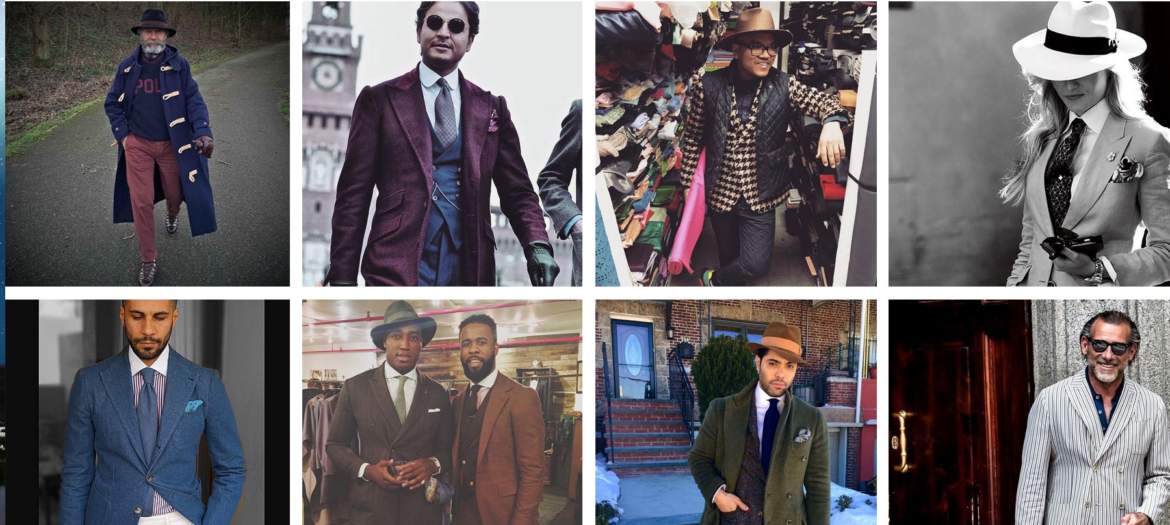
At Liberatti we love the European way of dressing, especially the Italian gentleman’s sprezzatura, a phrase which describes ‘the art of seemingly effortless, elegant dressing’.
In our ongoing search for the sources of women’s sartorial style, our theme this month is, ‘Top to Toe Sprezzatura’ and put simply, the essential foundation of elegant dressing on which everything else quite literally rests, is a fine Italian heel.
The story here, modified from Fast Co-Design, an essential source of inspiration for the Stylish Mind like yours, gave us cause for great optimism in the shoe department.
We hope you enjoy finding out about entrepreneurs who are helping support a renaissance in Italian shoe manufacturing and, as always, we welcome your comments.
Story by ELIZABETH SEGRAN
Amanda Carye stumbled on the idea for her shoe company, Idoni, when she moved to Italy for a six-month business course.
Strolling past gelato stands and chapels in Venice, she came across shops selling furlane, a slipper invented during the Second World War, when resources were scarce.
At the time, Italian shoemakers—whose craft is still passed down from generation to generation—took pride in being able to make a beautiful shoe out of pretty much anything. They used old bicycle tires to create soles with good grips, jute bags for a waterproof interior, and lush recycled fabrics like velvet curtains or silk dresses for the upper.
The result was a shoe that looked like a cross between a ballet flat and a smoking slipper, with a colorful exterior and excellent traction. “Old ladies remember wearing furlane when they were children, running around in the countryside,” Carye says. “The shoes are highly functional, but they are also very elegant.”
Carye’s plan was to modernize the furlane for American women, many of whom struggle to find footwear that is comfortable but doesn’t look like sneakers or (horrors) orthopedic shoes.
While in Italy, she began to search for a factory where a master shoemaker could help her engineer a flat shoe that offered good arch support, stability, and cushioned insoles without sacrificing beautiful design.
As Carye began the search, she found dozens of family-owned factories that had been making shoes for some of the world’s best known luxury brands, including Prada, Jimmy Choo, Christian Louboutin, and Manolo Blahnik. She landed on a factory in the Brescia region, two hours east of Venice, where the owner was just as excited about prototyping her ideal shoe as she was.
Her brand, Idoni, was born.
Carye’s shoes go for $135, rather than the usual $600 you’d expect to pay for an exclusive “made in Italy” shoe. She’s able to set a reasonable price because she only sells the shoes on her website, following the model pioneered by Warby Parker and Everlane that cuts out retailer markups.
Everyone wants products that are handmade by the most skilled artisans in the world. In turn, this model allows European artisans to find a broader audience.
According to the most recent data, released in 2014, there are more than 5,000 footwear manufacturers in Italy, employing about 77,500 workers.This means that the average factory only employs 15 people.
Shoemaking skills are often passed down from parent to child; some businesses can trace their origins back to the medieval period, when a shoemaking guild was established in Florence and transformed the trade into an art governed by rigorous rules to ensure quality.
Shoe factories are spread all over Italy.
Marche, in the center of the country, makes the greatest volume of shoes; Veneto is known for its high-end luxury women’s shoes, hosting the factories that make produce goods for Louis Vuitton and Yves Saint Laurent; Apulia has factories that specialize in sneakers and there are hubs in Tuscany, Lombardy, and Naples.
But it can be difficult convincing cobblers that a new business model can work.
Carye, for instance, had to explain her online-only approach several times to the factory owner with whom she wanted to work. “He had heard of Bloomingdale’s and Nordstrom,” she says.
“But the idea of selling a product on your own website sounded insane to him. He wasn’t sure anybody would buy the shoes.” Eventually, he took a chance on her.
One of the keys to these companies’ direct-to-consumer models is the idea of “post-luxury”: craftsmanship and meticulous design without the artificially inflated prices and exclusivity.
Maria Gangemi’s, founder of M Gemi, been familiar with this concept her whole life.
Growing up in Sicily, Gangemi remembers visiting boutiques that sold beautiful, high-quality shoes and bags made in local factories without massive markups.
Over the years, however, she observed that Gucci, Prada, and other luxury brands were bringing more and more business to these factories in an effort to expand their output and global footprint. In the process, they edged out smaller brands that charged less for their products. Soon, the well-crafted heels and handbags that Gangemi loved stopped appearing in local shops.
She decided to take the model she had observed as a child and modernize it by selling her products online. This way, she could sell her shoes for between $150 and $300, about a third the price of Jimmy Choos or Manolo Blahniks.
She spent months traveling around the country, talking to cobblers about the kind of shoes she wanted to make.
Some factories exclusively make leather pumps; others specialized in driving moccs. As she expanded from heels and flats into boots, sneakers, and men’s shoes, she had to find other craftsmen with a variety of different skills.
These days, her New York-based company, M.Gemi, works with a dozen family-owned factories concentrated in the Florence region.
She convinced these manufacturers to work with her by promising to order shoes throughout the year, rather than following the traditional two-season fashion calendar.
She hopes that by building long-term relationships with them, rather than just treating them like contractors, M.Gemi will be able to release a regular stream of fashion-forward shoes that are of the highest quality.
Business has grown four times over the last year, and half of all new customers visiting the site make a second purchase.
That’s an encouraging sign, Gangemi says, that the products are hitting the mark, quality-wise.
M.Gemi has caught the eye of investors like Accel, General Catalyst, and Forerunner Ventures, who have poured $32 million to help the company expand.
Image Credits: With thanks to